BD Pragostav · since 2004
Pragostav: four websites, two portals, one brand
A property manager with a unified identity, four generations of its website and two generations of its client portal. Twenty years of collaboration that began with taking a paper-based company digital.
From business card to partner for digital operations
The collaboration began in 2004 with a simple company website. The housing cooperative’s management at the time wanted to take a company built on paper and binders into the digital age. As the cooperative’s digital maturity grew, so did what it needed from [binary] — twenty years of collaboration fall into five eras.
Five eras of collaboration
2004–2008 · Being visible
The first website had the original logo, minimal graphics and simply organised content — the way companies communicated online back then. The site was mainly a business card. In 2007 it was replaced by the second generation — already with a new logo, but still built the old way.
2009–2015 · Giving clients their data
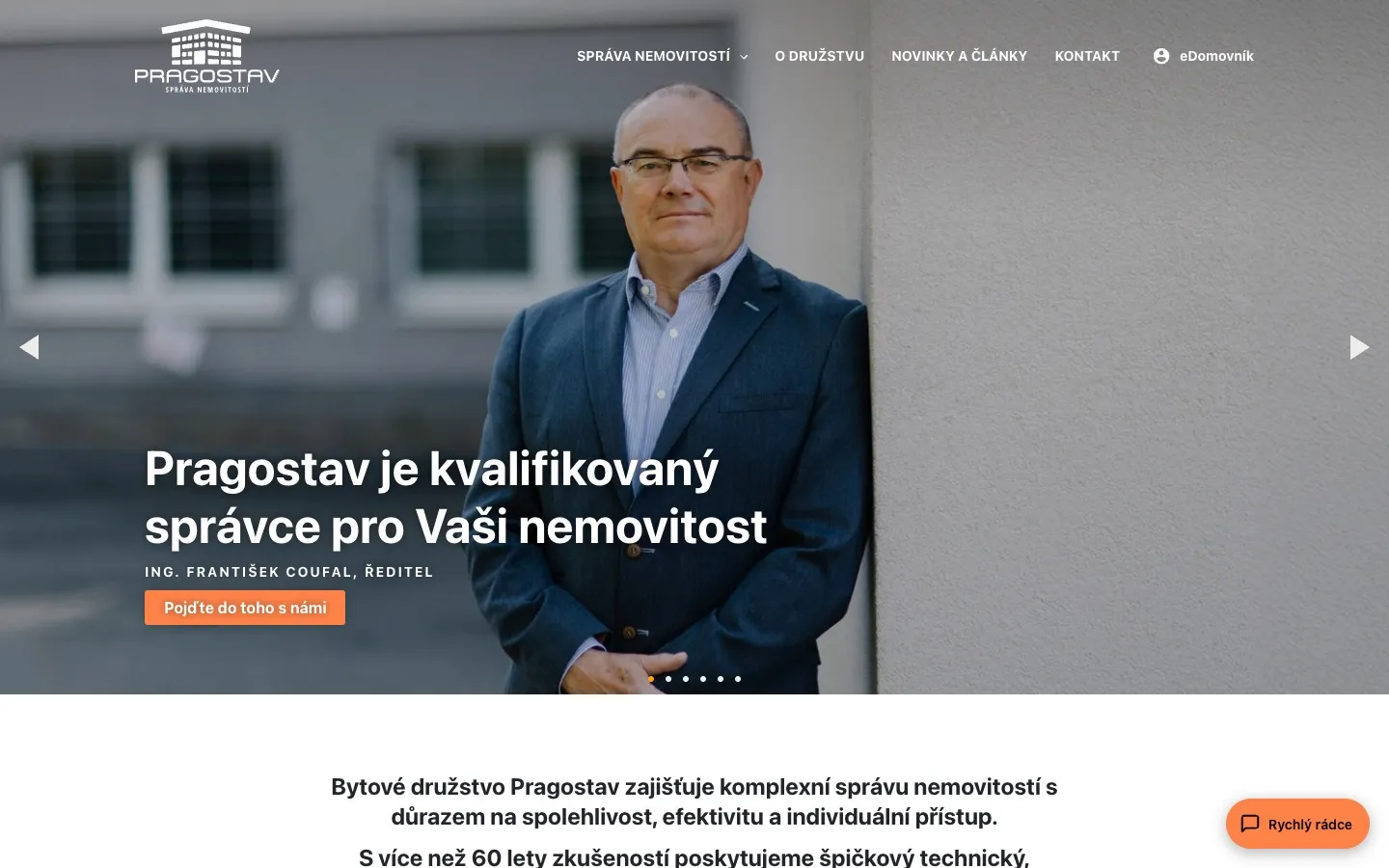
First came the logo, colours and typeface — the first stage of the identity, structurally building on the cooperative’s original emblem. Then analysis and strategy, and in 2010 the client portal muj.pragostav, the first integration with the WAM system: for the first time, cooperative members could see their data online. This need gave rise to eDomovník, which replaced muj.pragostav in 2014.
2016–2019 · Communicating clearly
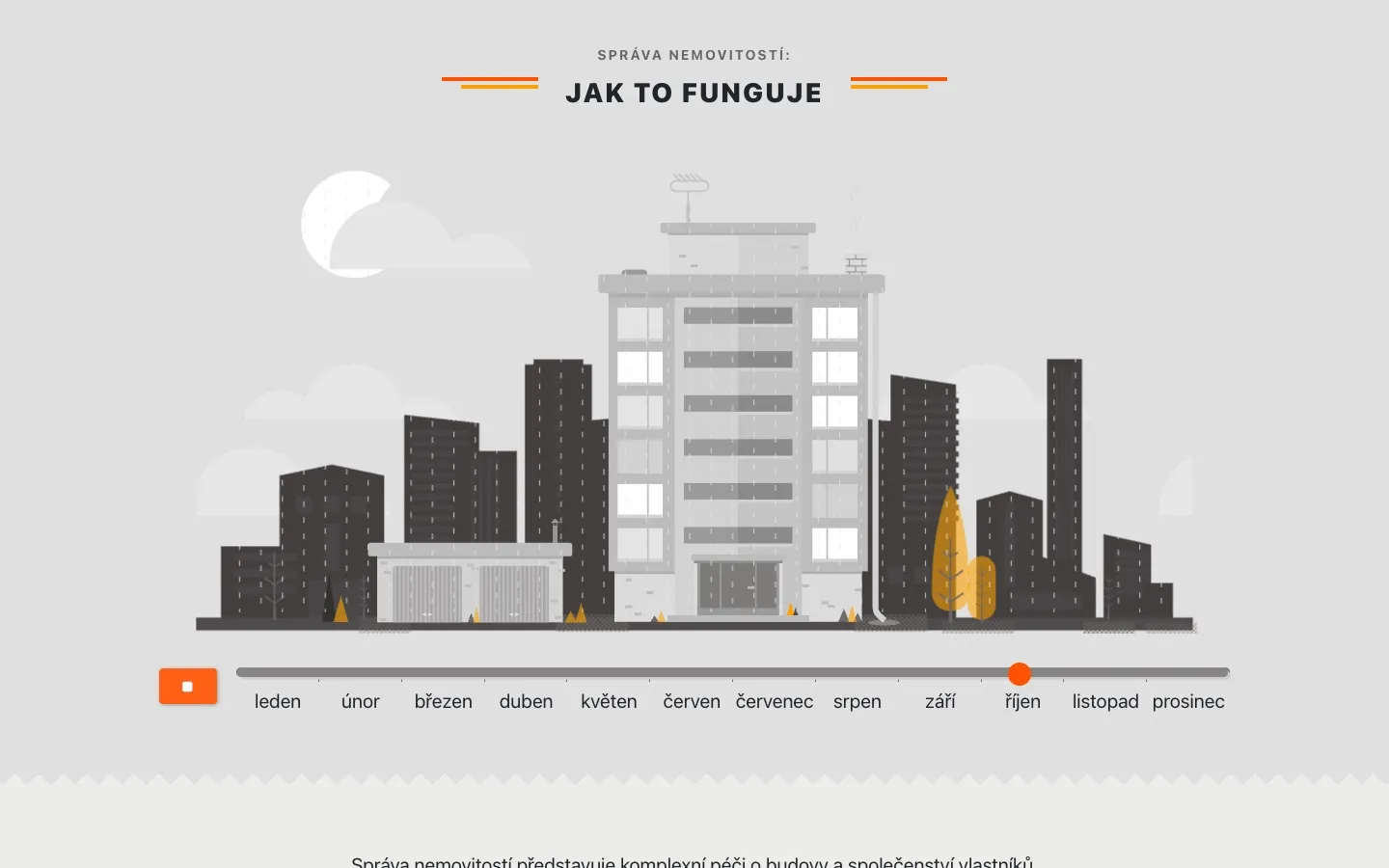
The third generation of the website built communication on faces, facts and services instead of empty phrases: the homepage as a story, the team as a contact directory, plus a photo shoot of the whole team and an animation of a building. The second stage of the identity followed, with a brand manual and printed materials — all the way to the building and vehicles.
2020–2022 · Documents at the source
The Aplis DMS portal made documentation on buildings and clients available directly from the cooperative’s document management system — everyone sees only what is meant for them. Loosely connected to eDomovník.
Since 2024 · Deciding together
The fourth generation of the website kept the proven concept and built it on a solid data model. Today Pragostav turns to [binary] with questions that go far beyond the website: what the brand should look like, how to work with documents, which tools and suppliers to choose. [binary] provides graphic design, photography and printing through subcontractors — taking on the organisation, the budget and responsibility for the result.
What matters today
The third generation of the website from 2024–2025 did not bring a new concept — the 2016 one had proven itself. It brought what years of operation had shown to be essential:
- A solid data model. Services, people, news and references are connected data, not manually maintained pages. Pragostav manages the content itself, and the website links itself together naturally.
- Connecting instead of copying. Content from Airtable, documents from Aplis DMS, data from the property management system in eDomovník — always straight from the source.
- Technical quality. Clean implementation that can be maintained and developed over the long term without rebuilds.
Where the risks moved
When a website serves mainly as a business card, the biggest risk is that it becomes outdated. Once client data flows through it and through the portals, the risks shift elsewhere. Along with them, the work changes too — work that is less visible at first glance:
- Availability and security. The website and the client portal are monitored, regularly updated and backed up. Operations are handled by whoever built the solution.
- Protecting client data. Cooperative members’ data is not copied anywhere — the portals read it directly from the property manager’s systems, and everyone sees only what is meant for them.
- Sustainability. A lean data model and a clean technical solution reduce the risk that the website will need to be rebuilt in a few years.
- Dependence on suppliers. Integration through system interfaces, data kept at the source, and one partner who knows the whole environment — from the website and portals to the subcontractors.
Takeaways
A long collaboration doesn’t mean doing the same work over and over. What the client needs changes, and with it, where the risks lie. A partner who knows the whole environment can catch these changes in time and focus attention where it is currently needed.
Deliverables in detail
The individual projects — from the logo and the building animation to the data model of the current website — are described separately in the overview below. The related client portal is covered in the eDomovník case study.